
Reality in Ruins by Jared Stacy
My former pastor's book on holy paranoia and good suspicion: a diagnosis evangelicals need to heed, and where I part ways with his solutions.
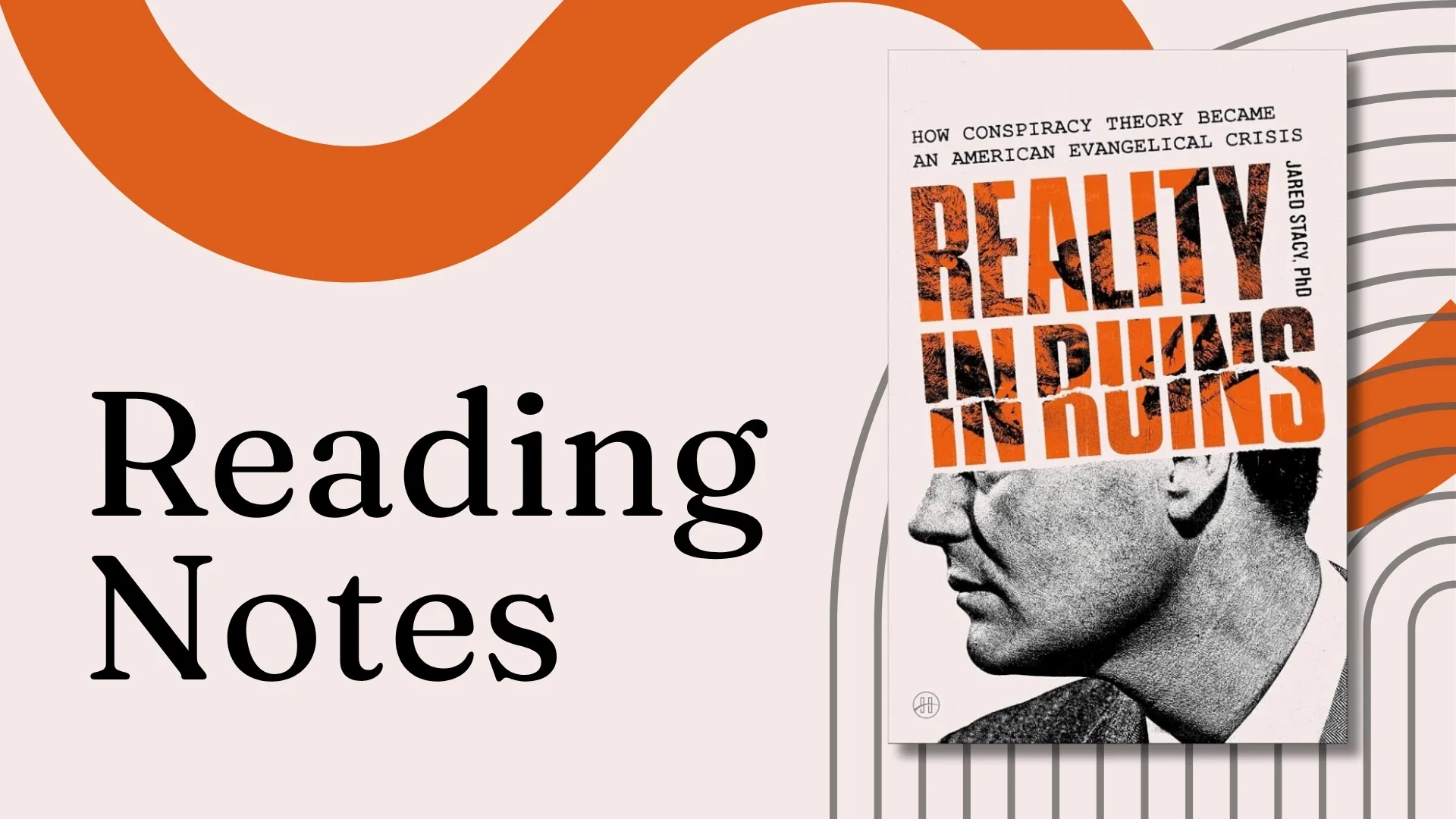
Jared Stacy is a former pastor of mine, and I’ve seen firsthand how he cares for and loves people. That is immediately obvious in his work, Reality in Ruins. He shares his story to help those who may be like him and are part of fundamentalist circles or circles drowning in paranoia and conspiracy theories, and through that story he offers to help pull people out of that context.
The book is well written, and it is encouraging to hear his story, and not just because I am familiar with Jared (he was my pastor in New Orleans at Metairie Church, the church plant he helped start through First Baptist Covington, Louisiana). His story gives his discussion genuineness and keeps it from becoming an academic concept or a work out of touch with its subject matter.
Holy Paranoia and Good Suspicion
The first half of the book sets the stage for what he has seen, both firsthand through his journey in ministry and through his upbringing: many people, both evangelical and not, let themselves fall prey to motivated thinking instead of thinking about the facts.
He uses phrases I haven’t seen elsewhere, like “holy paranoia” and “good suspicion.” Holy paranoia gives a helpful framework for what many of these closed, paranoid groups do with the information they peddle, which is ultimately to gain power in whatever circles they have influence in. Good suspicion is also a helpful concept: using healthy thinking to evaluate whether something falls in the realm of conspiracy theory or motivated thinking, where the facts are skewed or tipped.
It is relevant and commendable that he tackles January 6 and the conspiracy-fueled events that led to it. His call to people held captive by holy paranoia or conspiracy theories (suppressed and oppressed, if you will, by misinformation that benefits a small minority) is a poignant and timely one amid the polarization of so many of our communities. It’s a necessary conversation, and it genuinely needs a response from our churches at minimum, but also from society at large.
Where I Part Ways
I begin to diverge from the work when he offers counter-thoughts to these issues. One is his discussion of Scripture being used as a tool for power, with more helpful truths rooted in the person of Jesus. As in other works, overemphasizing the figure of Jesus in a way that compromises other elements of Scripture or reduces their force runs contrary to what Jesus said about Himself and what Scripture says about Jesus.
The other argument he makes is similar to one that advocates of pluralism make: that a lot of this problematic thinking is used as a tool for power and the manipulation of people. But that doesn’t mean we change exclusivity claims; it only makes it more urgent to correct or overturn their problematic use. Jesus’s claims about being exclusively the one true God aren’t any less true just because followers of Jesus have used them to oppress, attack, or bring other lines of thought or religion into submission. It just makes applying that truth morally problematic and in need of correction.
My Takeaway
This is a challenging read for many people today. It should wake us up to the amount of tribalism we allow to perpetuate in our groups, which throughout history has caused the oppression of people and led to problematic treatment of other humans. Jared’s argument here, especially as it applies in evangelical circles, is one we should heed, and I’ve experienced it firsthand.
Where I believe Jared errs is toward the other extreme: weakening the core truths held by individuals who use those truths for power. That doesn’t change the truth as truth. It only changes the use, purpose, and meaning behind that truth, which ought to be for the love of others and the salvation of souls, not oppression or treating others as lesser because they don’t belong in the same camp.
Readers of this book will get a healthy historical context and be alerted to some things that those of us who still belong to evangelicalism need to take heed of. We really ought to apply the understandings Dr. Stacy provides in the first half of this work and do something about what we’re seeing.